
How Hybrid Nonprofits and Social Enterprises Can Create Sustainable Revenue
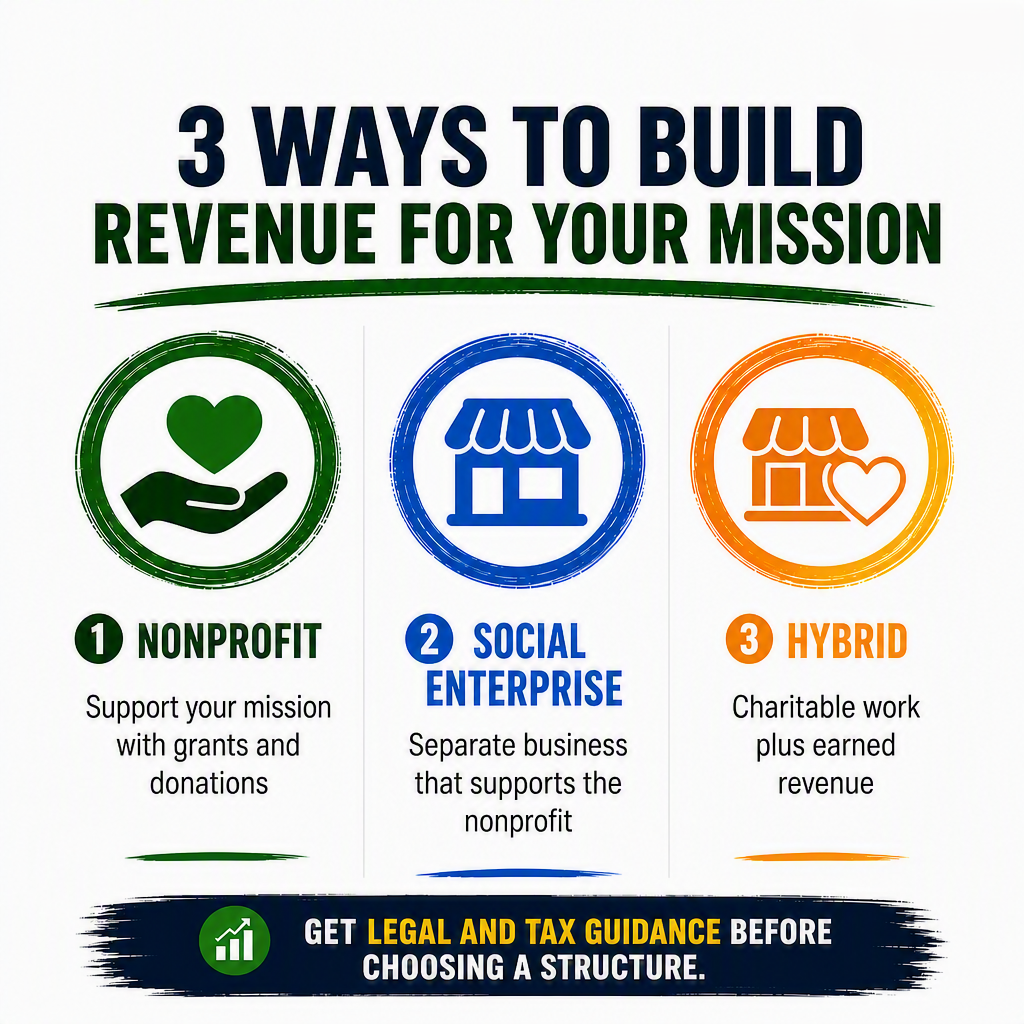
This practical guide will explore how to create nonprofit revenue diversification, earned income, unrestricted funds, and stronger nonprofit operations
A grant disappears. A major donor changes priorities. A longtime sponsor reduces their support. Suddenly, a nonprofit leader who has spent years building programs must decide what to cut, which positions to save, and how the organization will keep serving people who still need help. This kind of crisis rarely begins with a weak mission. It often begins with a funding model that depends too heavily on one source of income.
In a recent Ask the Experts conversation presented by Murad Auctions, guest speaker Tracy Allen of Impctrs Management Group explained why nonprofit leaders should think beyond grants. Her message was direct. A nonprofit has a mission, but it also has business responsibilities. It needs reliable revenue, clear systems, capable leadership, accurate records, and a plan for what happens when familiar funding is no longer available.
For some organizations, the answer may be income produced within the nonprofit. For others, it may be a separate social enterprise or a hybrid nonprofit model. The right choice depends on the mission, the proposed business activity, the leadership team, and the organization’s ability to manage growth without losing focus.
Why Grants Should Not Be the Only Nonprofit Revenue Stream
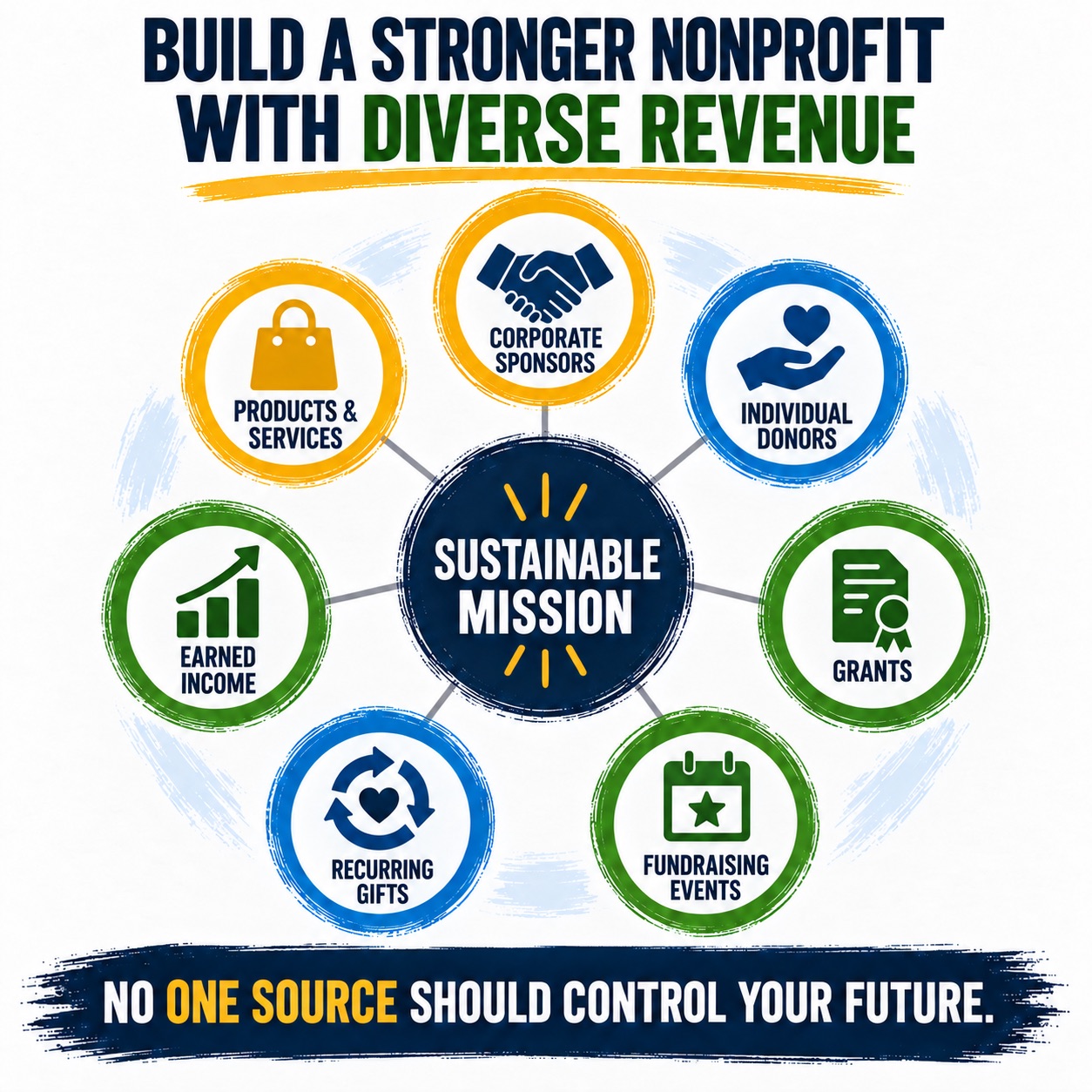
Many nonprofit founders begin with a familiar assumption. Once the organization receives tax-exempt status, grant money will follow. Grants are competitive, often restricted to specific programs, and never guaranteed to continue. Even a large award can create vulnerability when it becomes the organization’s main source of support.
Allen has worked with leaders who faced serious funding losses after depending on one major grant. Some organizations were forced to close or merge because they had not developed other revenue sources while finances were stable.
Diversification is much easier when an organization still has the money and staff capacity to plan carefully. A new business activity is not an emergency rescue plan. It requires research, startup resources, management, marketing, and time.
A healthier nonprofit revenue strategy may include grants, individual donors, corporate sponsorships, fundraising events, recurring gifts, program fees, merchandise, training, and other mission-related products or services. The goal is not to abandon grants. It is to prevent one funder or one fundraising method from controlling the organization’s future.
What Is a Social Enterprise
A social enterprise is a business created to earn revenue while addressing a social or environmental need. Unlike a traditional nonprofit, it generally has owners. Unlike a conventional business that focuses primarily on financial return, it builds public benefit into its purpose and operating decisions.
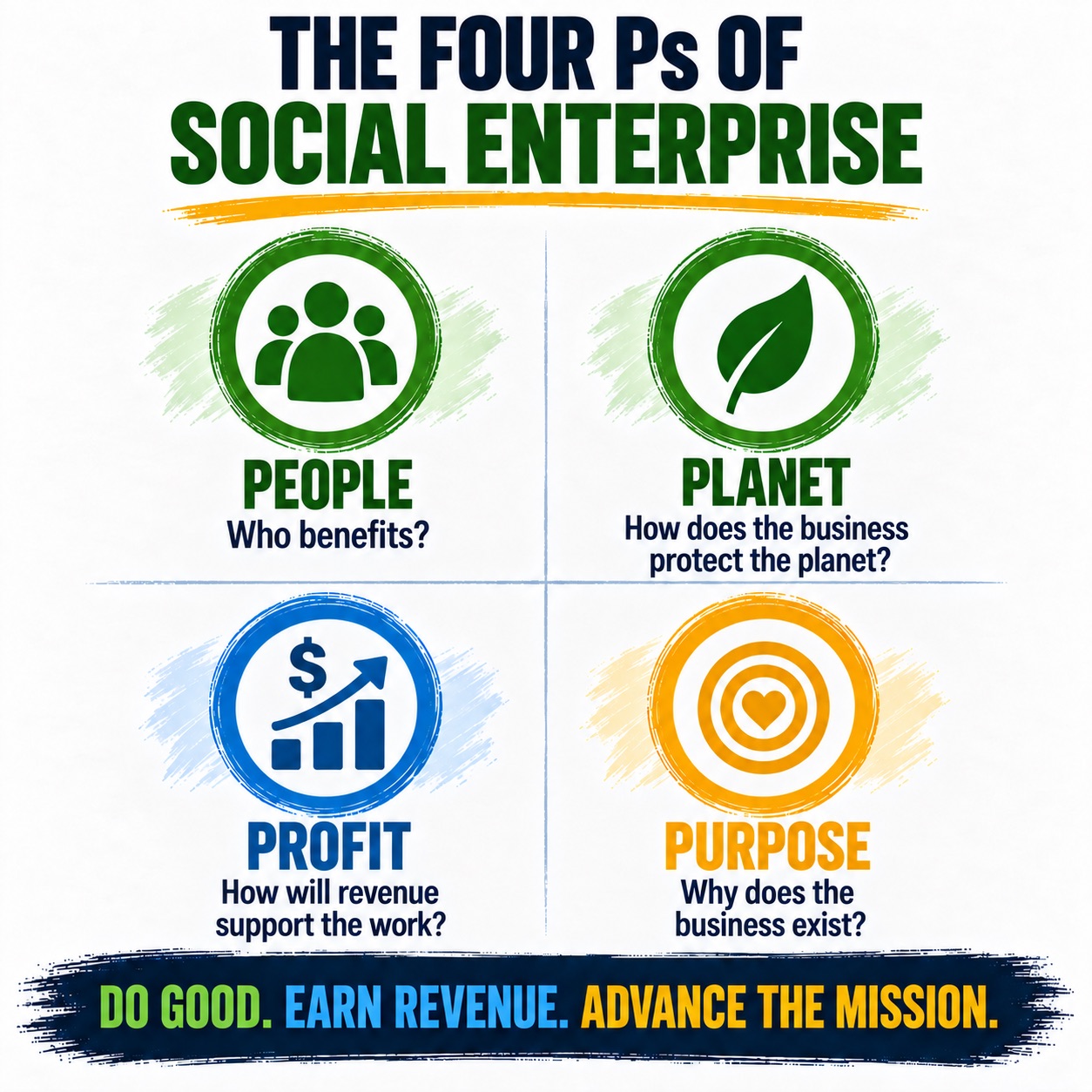
Allen describes social enterprise through four ideas: people, planet, profit, and purpose. The business considers whom it serves, how its work affects the environment, how profit will support the company and its impact, and why the business exists. The exact legal structure and reporting requirements can vary by state. Options may include a limited liability company, a benefit corporation, a low-profit limited liability company where available, or another structure suited to the owner’s goals.
What Is a Hybrid Nonprofit Model
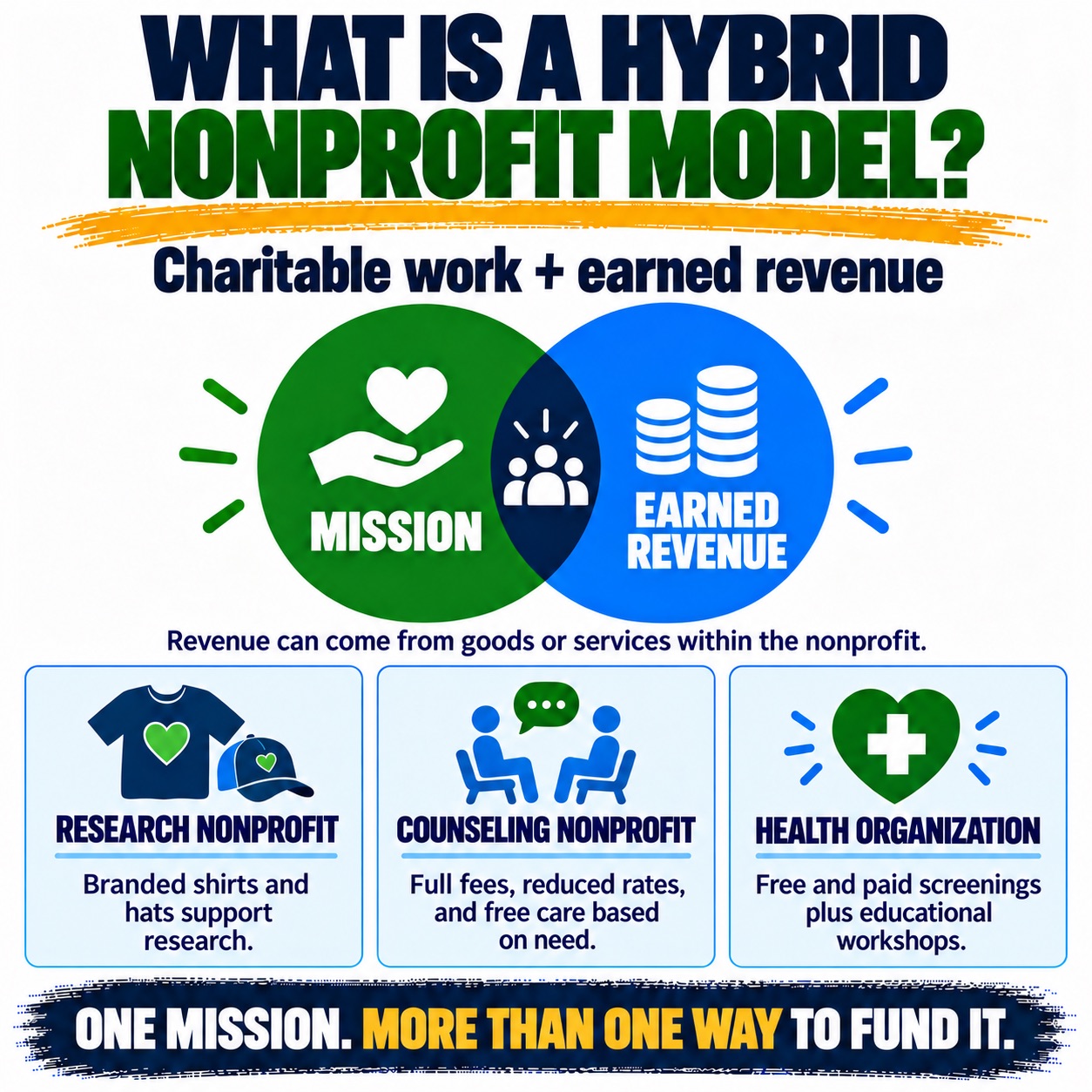
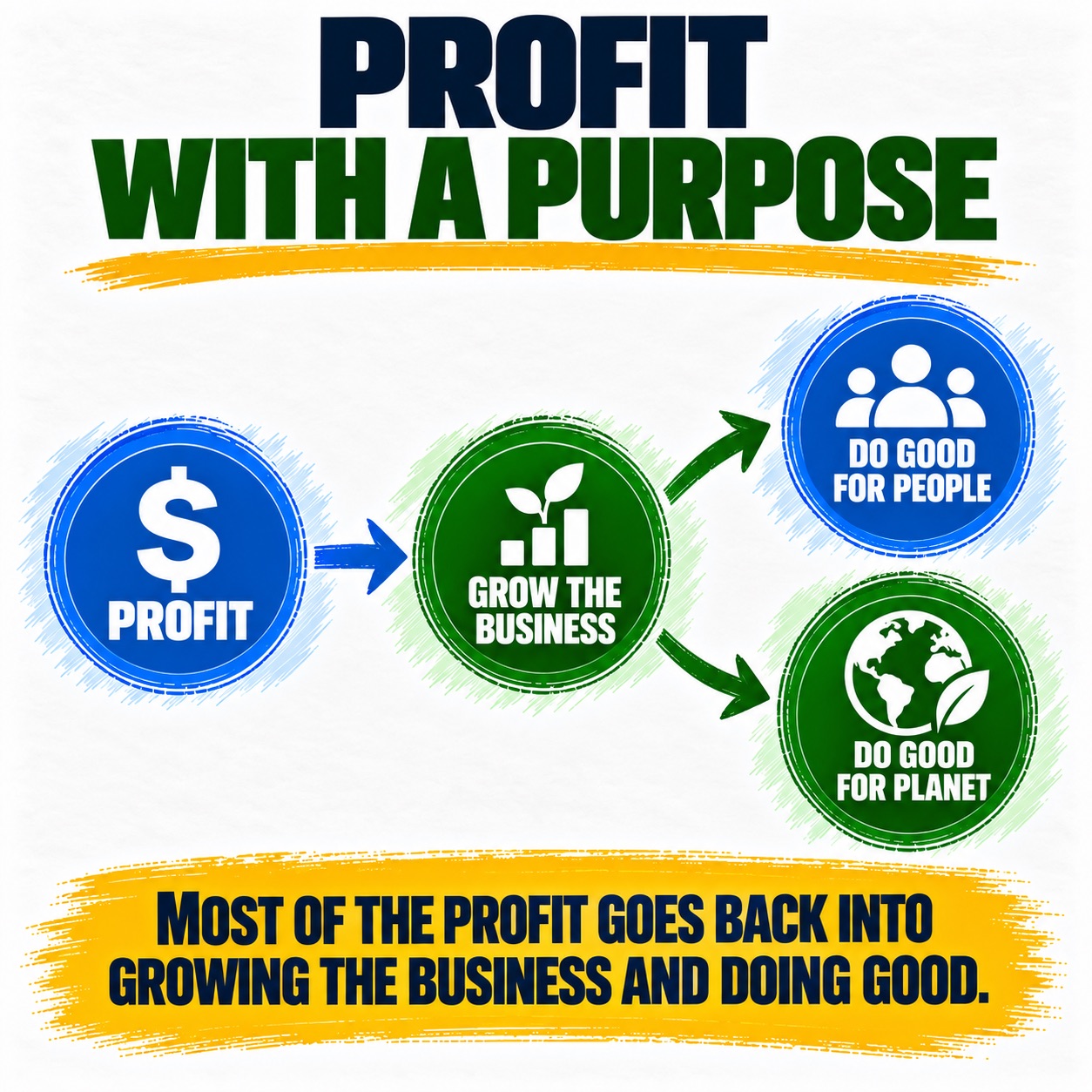
A hybrid nonprofit combines charitable work with an earned revenue strategy. That can happen in more than one way. The nonprofit may sell mission-related goods or services within the existing organization. A nonprofit that funds multiple sclerosis research, for example, might sell branded shirts and hats connected to its mission. A counseling nonprofit might charge full fees to clients who can afford them, offer a reduced rate to others, and provide free services to people with the greatest financial need. A health organization might combine free screenings with paid screenings and educational workshops.
Another option is to create a separate business owned by the nonprofit or aligned with it. That business can pursue commercial activity and contribute profits to the charitable organization. A founder may also own a separate company that supports one or more nonprofits. These arrangements require careful legal, tax, governance, and accounting decisions. The organizations must be managed as distinct entities, with clear agreements and clean financial records.
Tax-exempt organizations may owe tax on income from a trade or business that is regularly carried on and is not substantially related to the organization’s exempt purpose. Before launching any earned income activity, leaders should speak with a qualified nonprofit attorney and accountant about unrelated business income, ownership, money transfers, conflicts of interest, and state requirements.
The Value of Unrestricted Funds
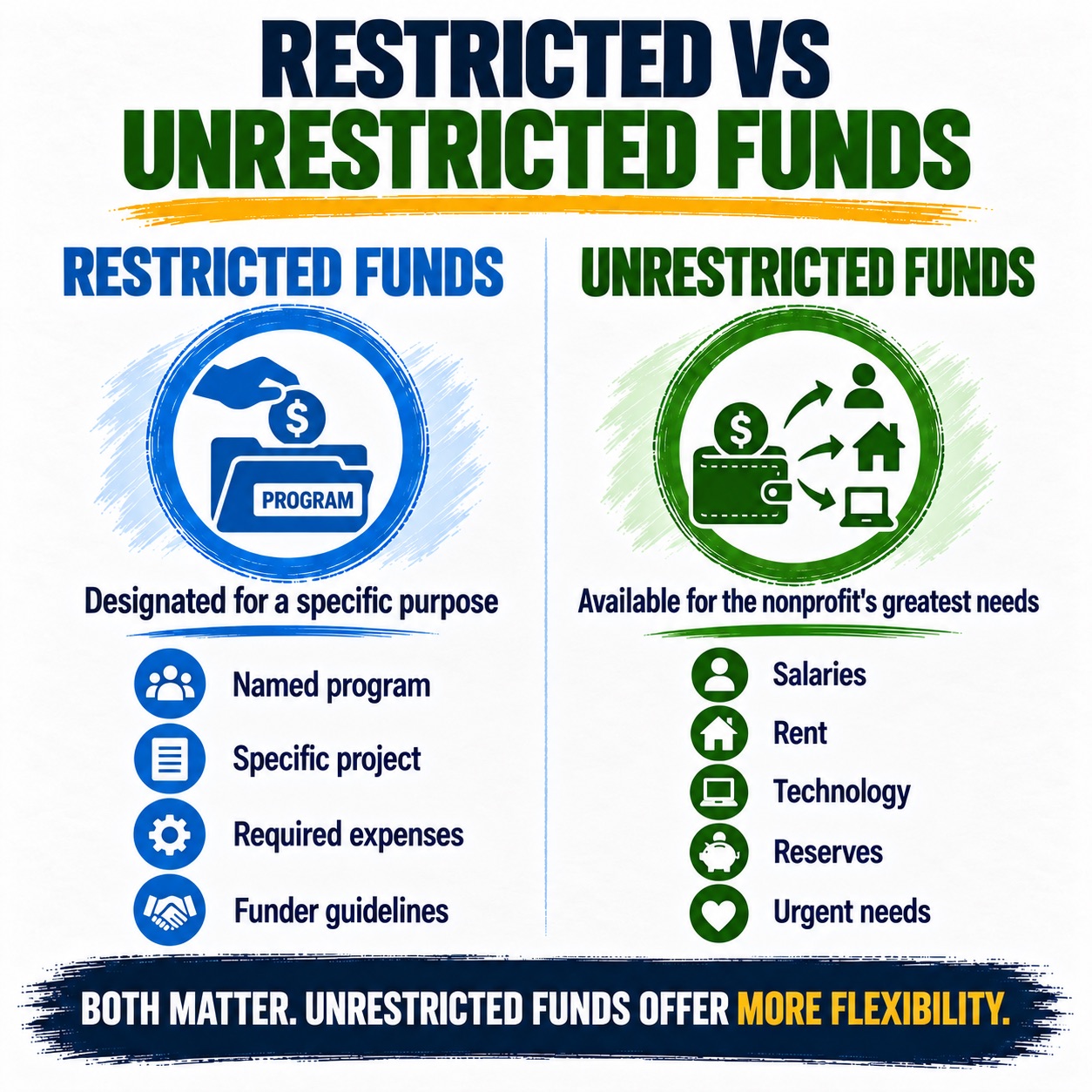
The most attractive benefit of earned income is often flexibility. A restricted grant may pay for a specific program but prevent the organization from using those dollars for rent, technology, insurance, staff salaries, or other operating costs. Those expenses may not sound exciting to a funder, but programs cannot run without them.
Unrestricted funds give leaders room to respond to real needs. They can replace aging equipment, improve the website, hire administrative help, build a reserve, invest in fundraising, or cover a temporary gap. They can also help a nonprofit pay employees fairly. Allen pointed out the uncomfortable reality that some nonprofit employees earn so little that they qualify for the same services their organizations provide.
Earned income is not automatically unrestricted in every arrangement, and it does not remove the need for financial controls. Still, a thoughtfully designed revenue stream can give an organization more dependable money and more control over how that money supports the mission.
How to Choose an Earned Income Idea
A good idea begins with the mission and the people the organization already understands. Leaders should ask what knowledge, service, product, facility, or relationship they can use to create value for a paying audience.
An organization that offers free community services may discover that some participants can pay the full cost while others need assistance. A nonprofit with specialized knowledge might offer workshops, courses, consulting, or certification programs. An organization with a recognizable event or message might sell merchandise. A group with unused space might explore rentals if the arrangement supports its goals and meets legal requirements.
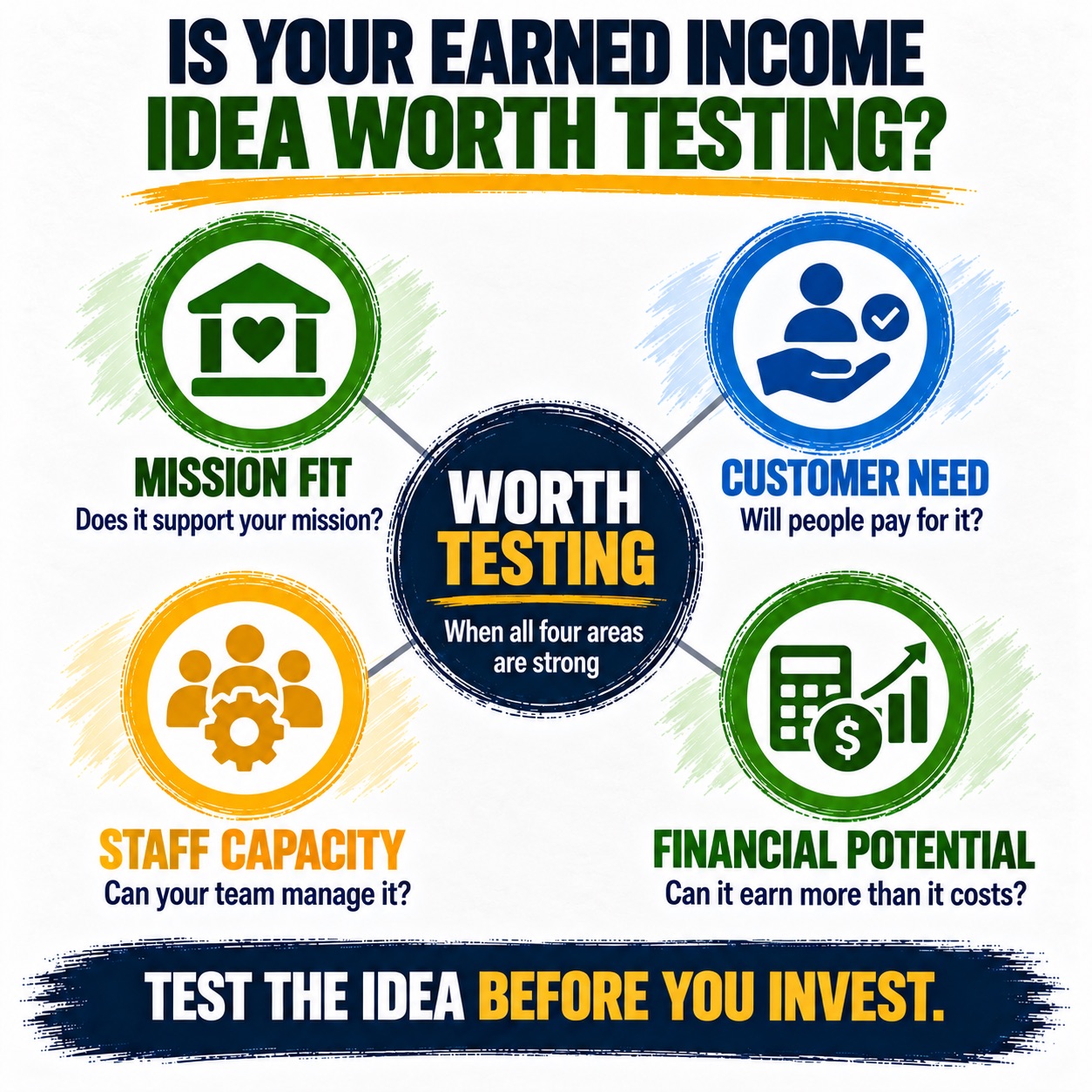
The strongest opportunities solve a real problem and have a clear customer. They also fit the organization’s capacity. A popular T-shirt at an annual event does not automatically justify starting a separate apparel company. The nonprofit may be able to sell mission-related merchandise within its existing structure. If the activity expands into general printing for outside customers, a separate business may make more sense.
Before investing, test the idea. Talk with potential customers. Estimate the true costs. Decide how you’ll market the offer. Identify who will manage it. Determine how success will be measured. A mission-centered idea still needs a sound business plan.
Why Separate Management and Accounting Matter
The biggest challenge in a hybrid model is management. Leaders are effectively operating two businesses, even when both support the same purpose. The new venture needs enough attention to become financially healthy, while the nonprofit still needs strong programs, fundraising, compliance, and community relationships.
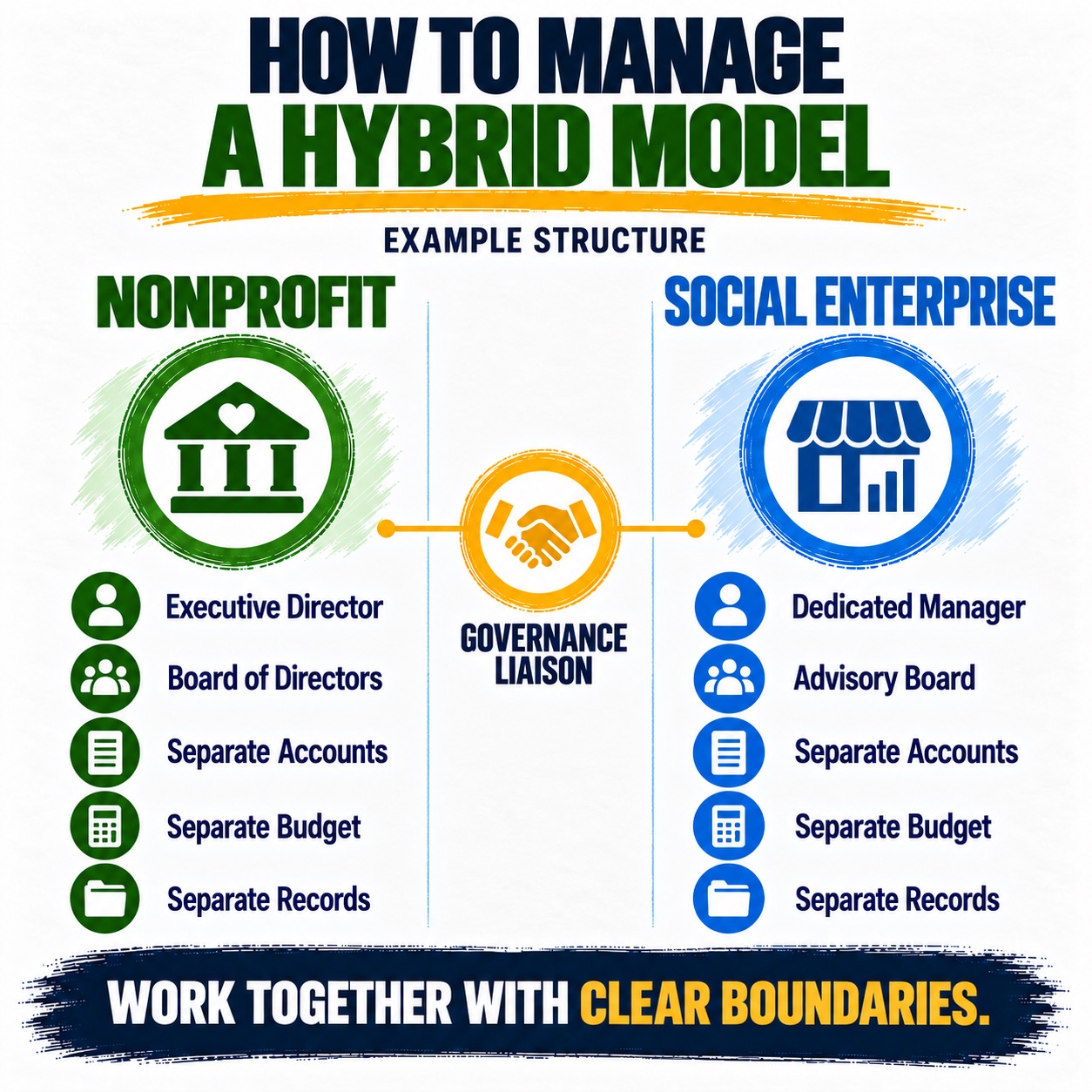
Allen advises against asking one executive director to run both sides without additional leadership. A separate manager can give the business daily attention and reduce confusion about responsibilities. Governance should also connect the two entities without blurring their roles. For example, a nonprofit board member might serve as a liaison to the social enterprise advisory board under written policies that explain authority and conflicts.
Accounting must remain separate. Each entity needs its own records, accounts, budgets, reporting, and oversight. Never casually combine funds because the organizations share a mission or founder. Written agreements should cover staffing, shared services, intellectual property, space, expenses, and payments between the entities. Clear boundaries protect both organizations and make financial reporting easier to understand.
Build Systems Before You Expand
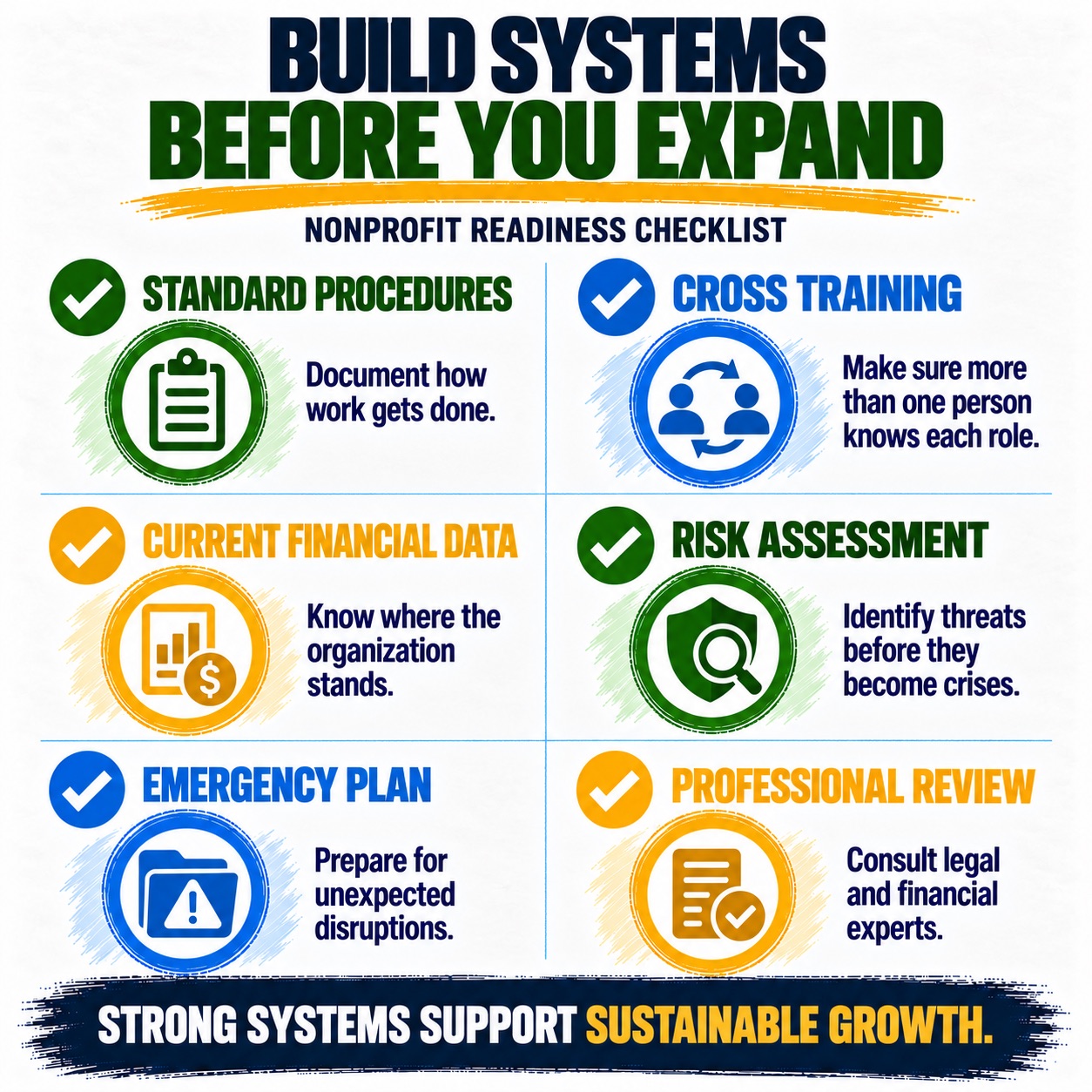
Revenue diversification will quickly expose weak operations. If information lives in one person’s inbox, staff members follow different procedures, or no one can find current financial data, adding another venture will create more confusion.
Allen recommends documented systems and standard operating procedures, so people know how to complete work. Cross-training is equally important. A nonprofit should continue operating when a key employee becomes ill, takes leave, or moves to another job. The organization also needs risk assessments, contingency plans, and an emergency plan for disruptions that could close an office or interrupt services.
Sustainable revenue also depends on the board. Board members have financial and governance responsibilities. They should understand the mission, review financial statements, attend meetings, help raise support, and use their experience and relationships to strengthen the organization.
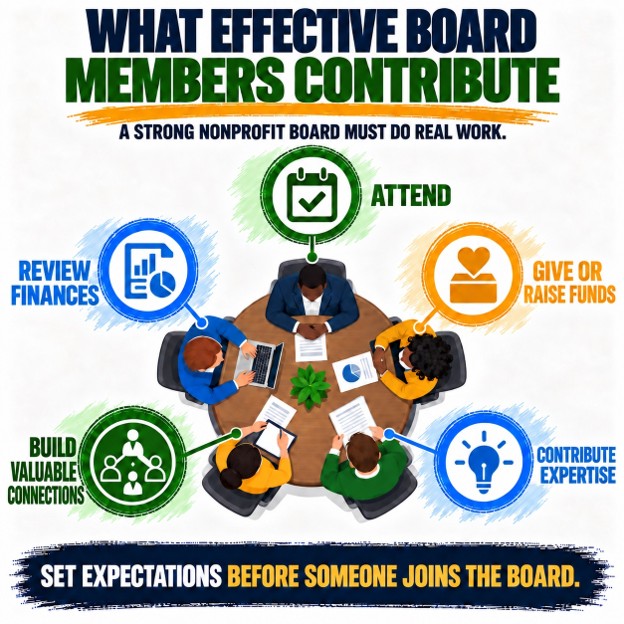
Allen recommends giving prospective members a board package that explains expectations before they accept the position. It can include a board member job description, attendance requirements, fundraising or giving expectations, conflict policies, and other documents appropriate to the organization. Bylaws should address the organization’s actual needs instead of relying on generic language copied from another nonprofit.
Fundraising expectations do not have to look identical for every member. One person may make a personal gift. Another may introduce sponsors, secure auction items, sell a table, or raise money through a professional network. A community representative with limited financial resources may contribute valuable outreach and experience. Build the board around the skills, perspectives, relationships, and work the mission requires.
Is Your Nonprofit Ready for a Hybrid Model
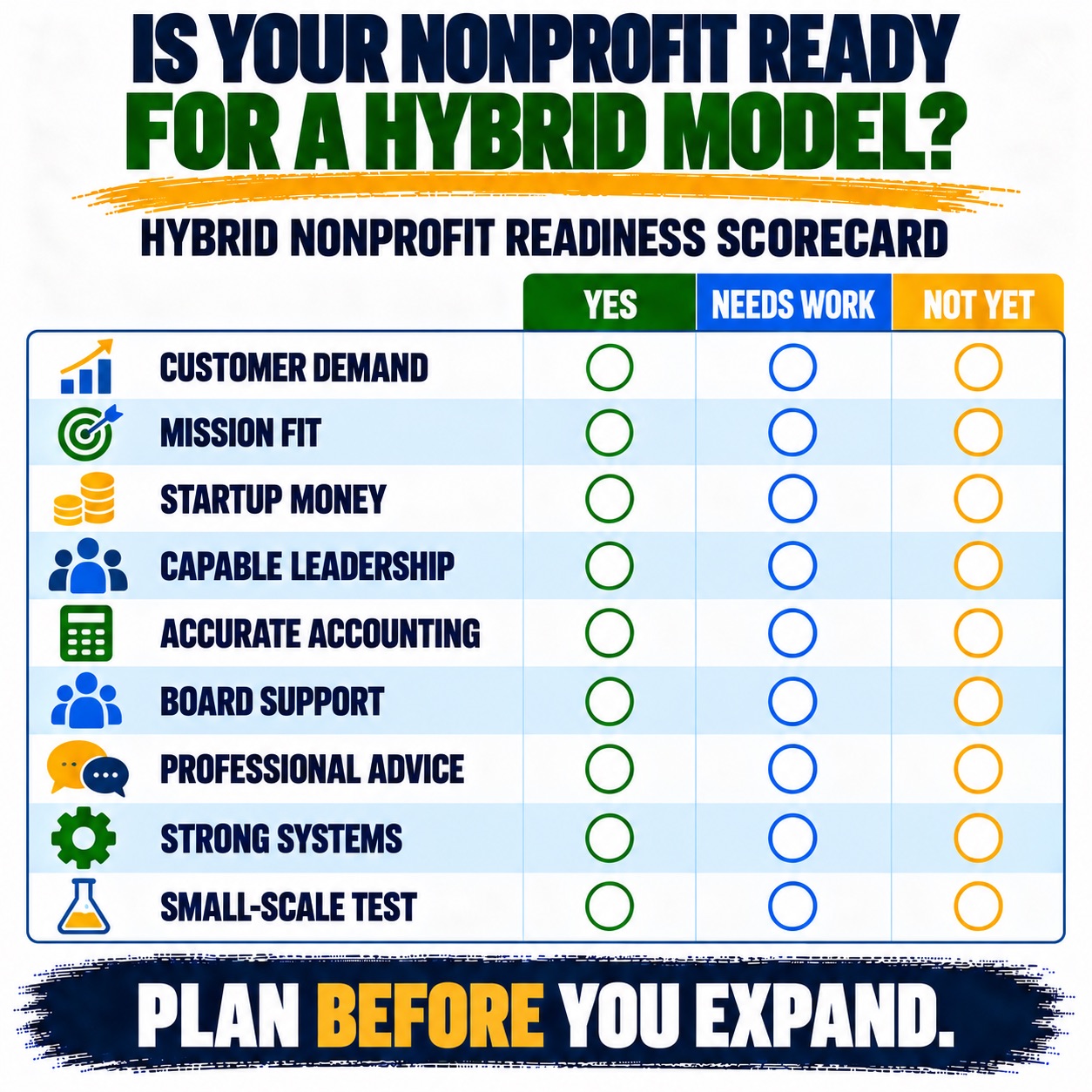
A hybrid model can create new possibilities, but readiness matters more than enthusiasm. Before moving forward, consider these questions:
- Does the proposed product or service solve a problem people will pay to address?
- Have you tested the idea?
- Is it closely related to the nonprofit’s mission, or would it be safer in a separate entity?
- Does the organization have money to plan and launch the venture?
- Who will manage daily operations?
- Can the nonprofit maintain separate accounting and reporting?
- Does the board understand and support the plan?
- Have an attorney and accountant reviewed the proposed structure?
- Are the nonprofit’s current systems strong enough to handle more work?
If several answers are unclear, the organization may need to prepare before expanding. That is useful information, not failure. Strengthening finances, leadership, policies, data, and procedures now can prevent an expensive mistake later. Allen uses a hybrid model framework assessment to help leaders identify gaps before they commit to a new structure.
Start With Sustainability Before a Crisis
The best time to diversify revenue is while the organization is stable enough to make thoughtful decisions. Begin by reviewing every current income source and calculating how much the organization depends on each one. Then identify one realistic earned income idea that fits the mission and test it on a small scale.
At the same time, strengthen the foundation. Update the bylaws. Clarify board expectations. Document essential procedures. Cross-train the team. Improve financial reporting. Build a reserve when possible. Decide what work to delegate so the executive director can focus on leadership rather than carrying every task alone.
A hybrid nonprofit or social enterprise will not fit every organization. For the right nonprofit, it can reduce dependence on grants, generate flexible revenue, and create another way to serve the community. The mission may be why the organization exists, but a sustainable business model helps ensure the mission can continue.
A nonprofit does not have to choose between staying true to its mission and finding new ways to support it. As Tracy Allen’s insights show, the right approach starts with thoughtful planning, a committed board, reliable systems, and an honest look at what your community needs. If you’re looking for more ways to take your nonprofit to the next level, explore Murad Auctions’ Ask the Experts series of blogs and YouTube Ask the Experts videos for more conversations with nonprofit experts. To learn more about Tracy Allen, visit her website or connect with her on LinkedIn.
Thank you so much for having me as part of your Ask the Experts conversation. I truly enjoyed discussing hybrid nonprofit models, social enterprise, and the importance of building more sustainable and diversified revenue strategies. I appreciate how thoughtfully you captured the conversation in this article and the opportunity to share insights with your nonprofit community. I hope it encourages more leaders to think proactively about sustainability before a funding crisis happens.
Thank you so much for having me as part of your Ask the Experts conversation. I truly enjoyed discussing hybrid nonprofit models, social enterprise, and the importance of building more sustainable and diversified revenue strategies. I appreciate how thoughtfully you captured the conversation in this article and the opportunity to share insights with your nonprofit community. I hope it encourages more leaders to think proactively about sustainability before a funding crisis happens.